
Paradise Valley Home Inspections
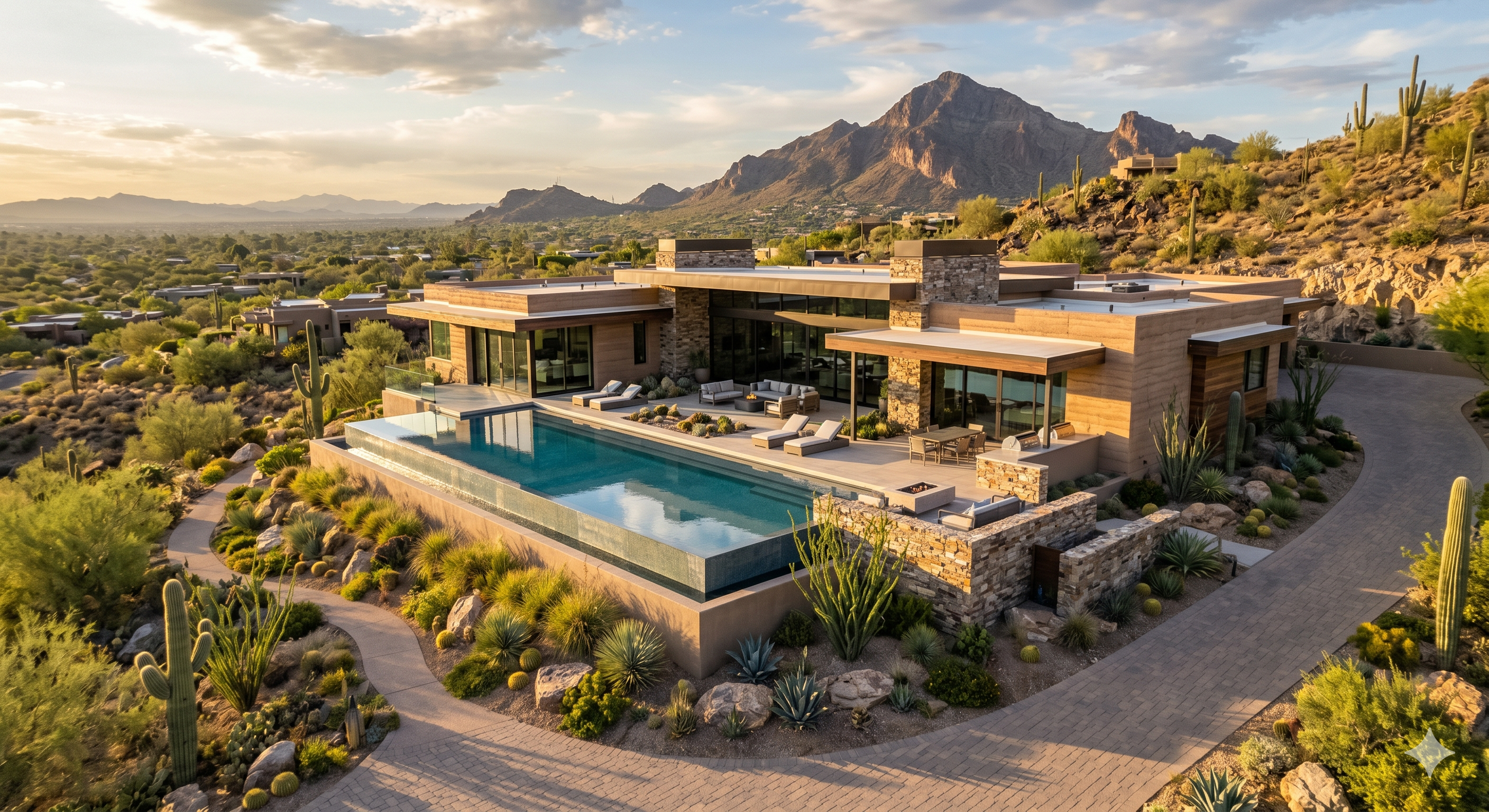
Luxury Paradise Valley hillside home with infinity pool and Camelback Mountain views
Paradise Valley is an affluent Arizona community known for luxury properties with premium finishes and often complex systems. Home inspections in Paradise Valley have some unique aspects.
Paradise Valley homes are often newer or extensively remodeled, which can mean fewer major issues but higher standards for construction quality. Buyers expect excellence—incomplete work or poor finishes that might be acceptable elsewhere aren't acceptable here.
Many Paradise Valley homes have pools, custom landscaping, and premium outdoor living spaces. Inspectors need expertise evaluating high-end features. Pool systems, outdoor kitchens, and landscape irrigation require specialized knowledge.
Smart home systems and advanced technology are common. Inspectors should evaluate security systems, automation, and integrated technology to ensure proper installation and functionality.
Custom architecture and finishes mean inspection may reveal cosmetic or functionality issues with custom elements. High-end expectations mean even minor issues warrant attention.
Paradise Valley's desert location means all Arizona-specific concerns apply: AC system adequacy, stucco condition, roof durability under intense sun, and drainage for monsoon storms. Affluent buyers don't tolerate these issues—expectations for property condition are high.
Price points in Paradise Valley are substantially higher than broader Arizona markets. The stakes for inspection findings are larger. A discovery of significant issues can substantially impact property value and negotiation dynamics.
Inspectors conducting Paradise Valley inspections should understand the market, luxury standards, and sophisticated buyer expectations. Thorough evaluation of high-end systems and premium finishes is essential for credibility in this market.
What to Do When Your Home Inspection Comes Back Bad
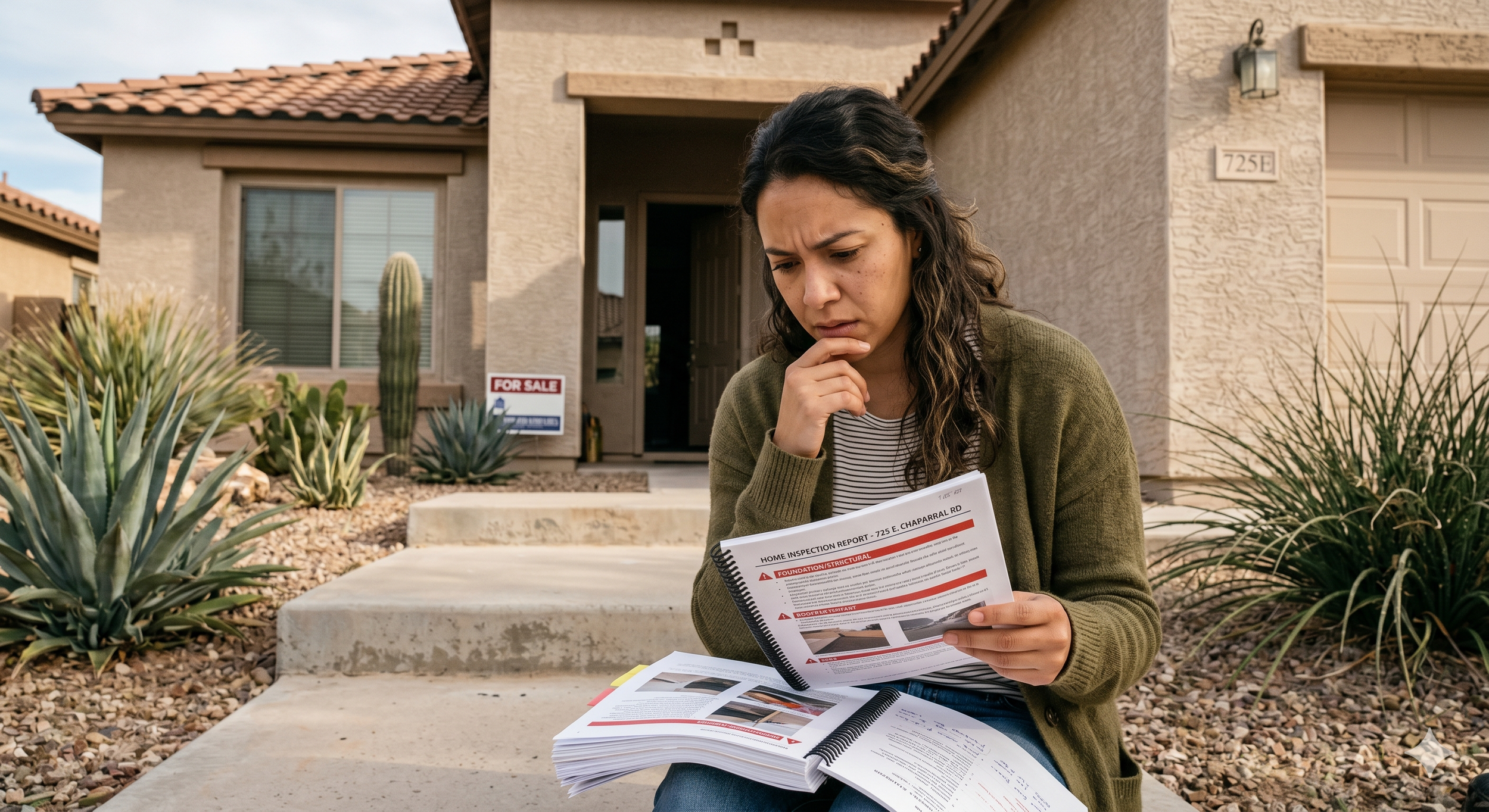
Concerned Arizona homebuyer reading home inspection report with significant findings

A bad home inspection can feel devastating. Discovering major issues in a property you've already made an offer on is stressful. Knowing how to respond protects your interests and options.
First, take time to process the report before reacting emotionally. Initial shock is normal, but don't make hasty decisions. Review the report carefully or hire a specialized inspector to clarify uncertain findings.
Assess the severity of issues objectively. Distinguish between significant problems and minor items. Not every defect is a deal-killer. Understanding which issues are critical helps you prioritize.
Get cost estimates for major repairs. For significant issues, obtain repair estimates from qualified contractors. Understanding actual costs (not guesses) informs your negotiation strategy and decision-making.
Consult your real estate agent about negotiation strategy. Your agent understands local market conditions, seller motivation, and negotiation dynamics. Professional guidance helps you approach repairs or credits strategically.
Evaluate your options: request repairs, request credits for repairs, renegotiate the purchase price, or terminate the contract. Each option has merits depending on the issues and circumstances.
Don't be pressured into decisions. You have specified time to respond (typically within the inspection period). Use that time to make informed decisions rather than quick ones.
If you terminate the contract based on inspection, remember that Arizona law allows termination during the inspection period without penalty. Walking away from a problematic property is sometimes the best outcome.
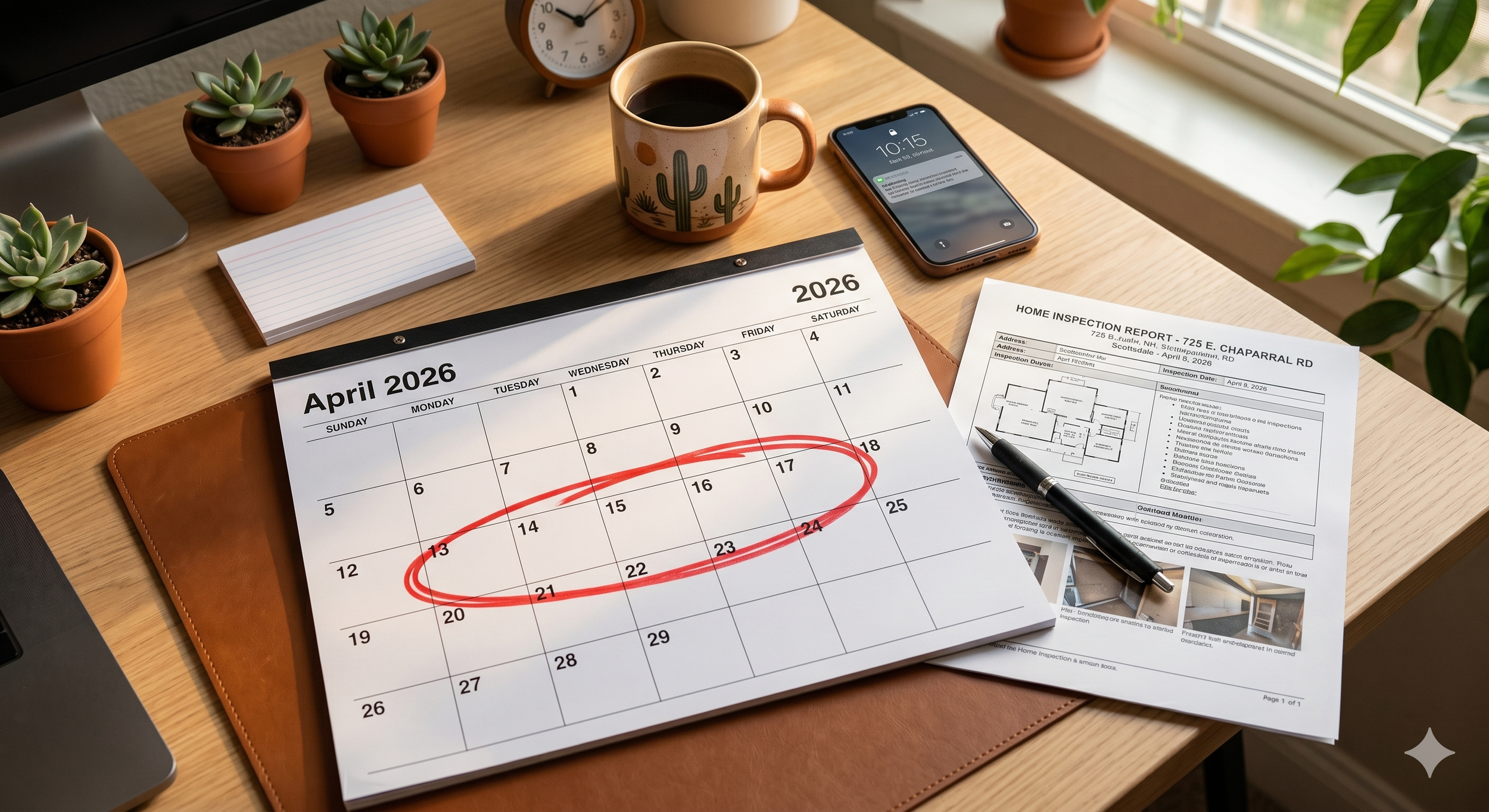
How Many Days After a Home Inspection Does the Arizona Buyer Have?
Calendar showing Arizona 10-day home inspection period deadline with inspection report
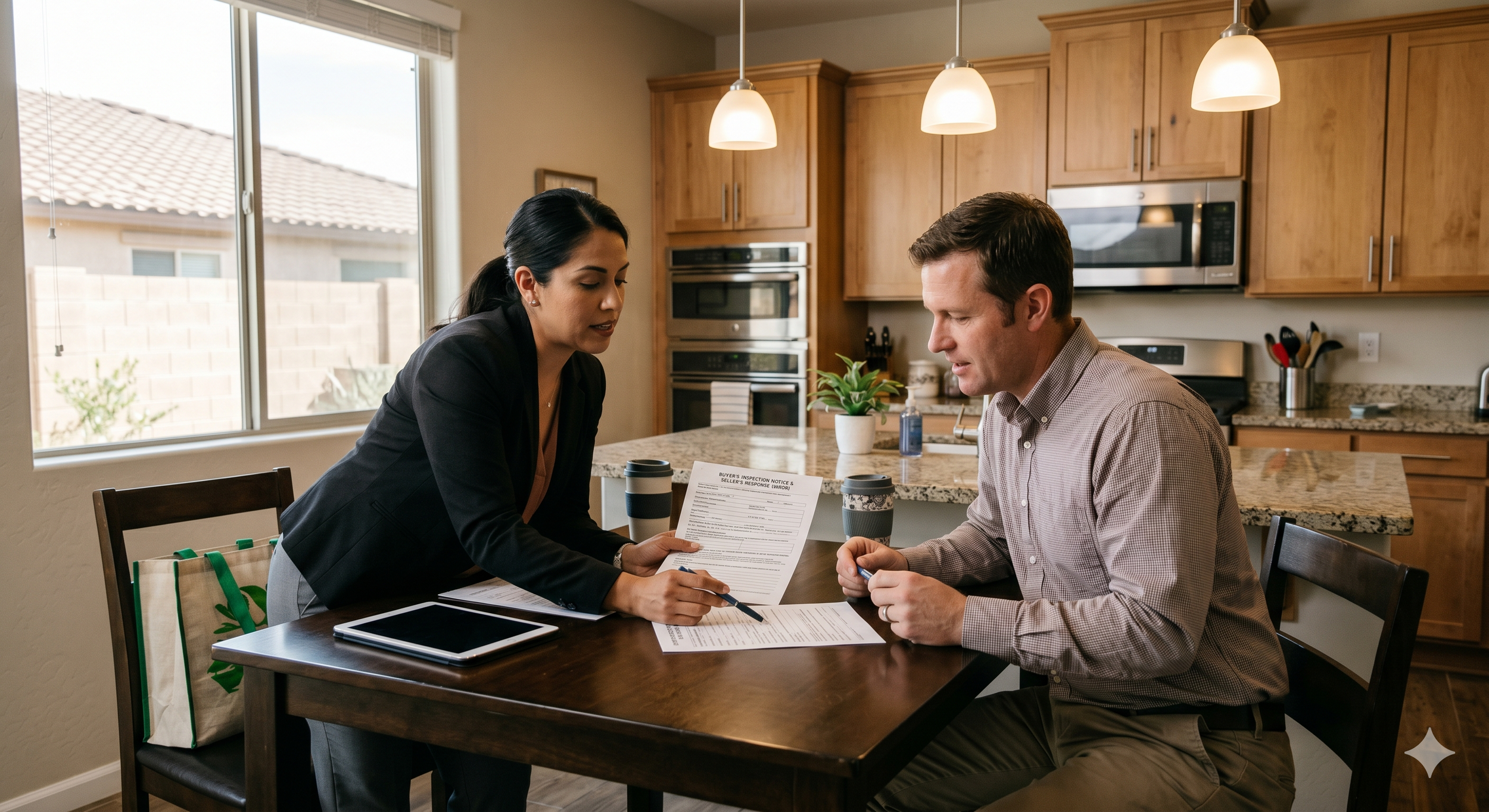
Arizona law provides a specific inspection period timeline. Understanding these deadlines is critical—missing deadlines can result in losing your right to negotiate or terminate based on inspection findings.
The inspection period in Arizona is typically 7-10 days, as specified in the purchase agreement. This period begins on a specific date stated in the contract—usually the day after the purchase agreement is signed, but contracts sometimes specify different start dates.
During this period, the buyer has the right to conduct inspections, obtain reports, and decide whether to request repairs, request credits, renegotiate the purchase price, or terminate the contract based on inspection findings.
To terminate based on inspection during this period, Arizona law requires the buyer to provide written notice to the seller before the inspection period expires. Failing to provide notice forfeits the right to terminate without penalty, locking you into the purchase even if inspection findings are problematic.
If the buyer decides to request repairs, Arizona's BINSR (Buyer Inspection Notice and Seller Response) process applies. The buyer provides written notice of defects within the inspection period. The seller then has until a specified response date (typically 2-5 days later, as specified in contract) to respond.
The seller's options are to: agree to repair items listed, offer credits, counter-offer repairs or credits, or refuse to address items. If parties can't agree, the buyer can typically terminate during a specified deadline if the contract includes such provisions.
Timing is crucial. Arizona real estate moves quickly. A buyer who doesn't read inspection reports, evaluate findings, and submit notices within these tight deadlines can lose valuable rights. Many Arizona homebuyers miss deadlines and end up unable to terminate or renegotiate, even when inspection reveals significant problems.
Professional assistance helps. Real estate agents typically manage these timelines and ensure notices are submitted appropriately. Having an agent familiar with Arizona's BINSR process protects your interests.
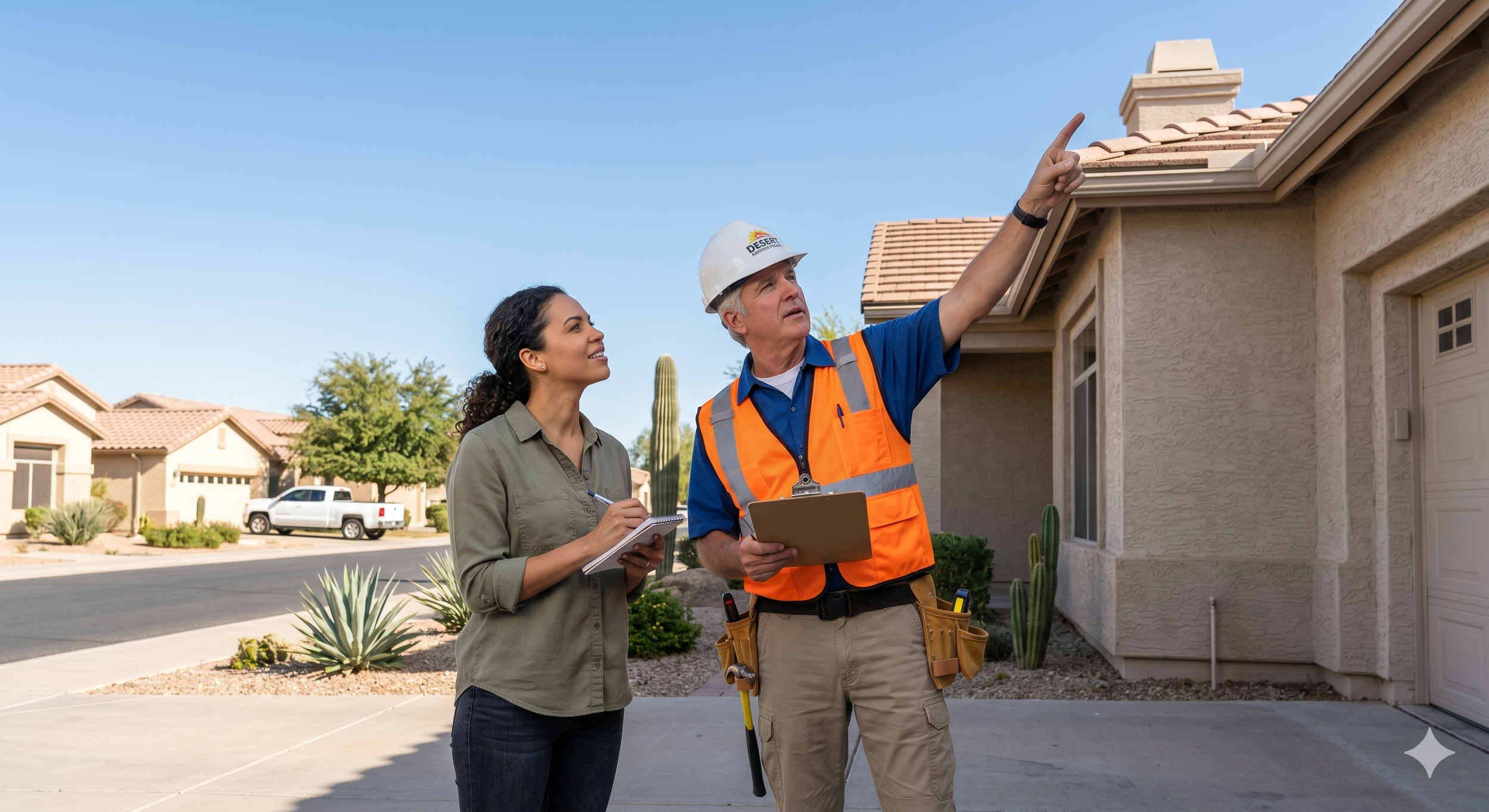
What to Look for During Your Arizona Home Inspection
Home inspector pointing out roof concerns to buyer during Arizona home inspection walkthrough

While home inspectors do the detailed work, understanding what they're evaluating helps you assess the property critically during inspection.
The foundation and structure are crucial. Look for visible cracks, evidence of settling, water stains that suggest water intrusion, or soft areas. Arizona's expansive soil can cause foundation movement—look for corresponding cracks in walls or floors that suggest structural issues rather than cosmetic settling.
The roof is obvious but easy to underestimate. Look at shingle condition—curling, missing pieces, or granule loss all indicate aging. Check flashing around penetrations (chimneys, vents, skylights). Arizona sun ages roofs quickly; understand the roof's approximate age and condition.
Water sources are critical. Look at gutters, downspouts, grading, and drainage. Arizona homes sometimes have inadequate drainage for monsoon rains. Look for evidence of water intrusion in foundation areas, crawl spaces, or attics. Water damage is expensive to remediate.
HVAC systems are essential in Arizona. Verify the AC system operates, maintains temperature, and doesn't show obvious problems. Check unit age and ask about maintenance history. Older units may need replacement soon.
Plumbing and electrical systems may not be immediately obvious but matter significantly. Look at water pressure and drainage quality. Check for signs of older electrical systems. Arizona code requires three-prong outlets in kitchens and bathrooms; look for compliance.
Stucco exterior condition is Arizona-specific. Look for cracks, soft areas, evidence of repair attempts, or water stains. Probe with a tool (if inspector allows) to check for soft stucco indicating water intrusion or deterioration.
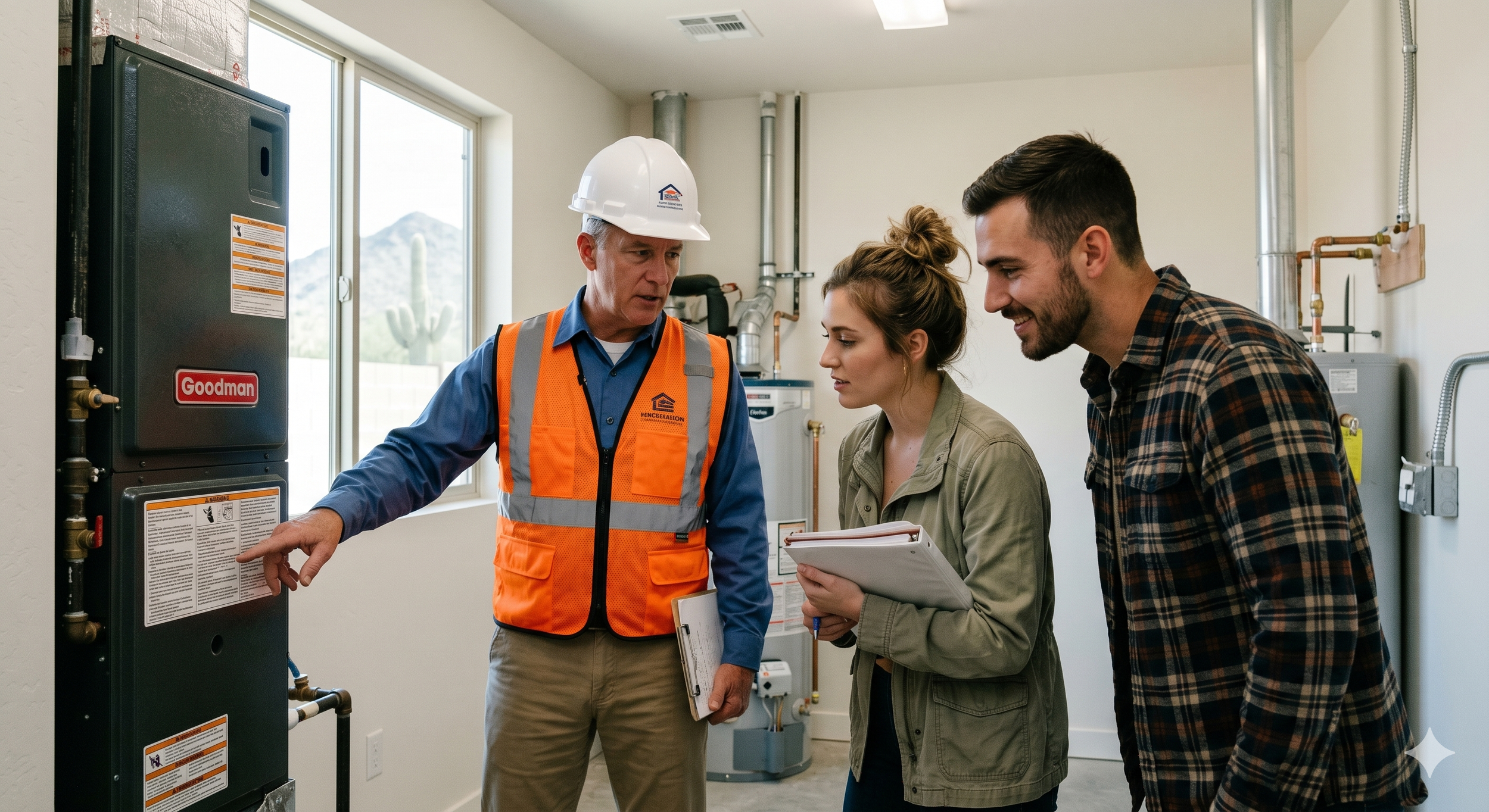
Home Inspection Tips for First-Time Buyers in Arizona
First-time Arizona homebuyers walking through home inspection with professional inspector
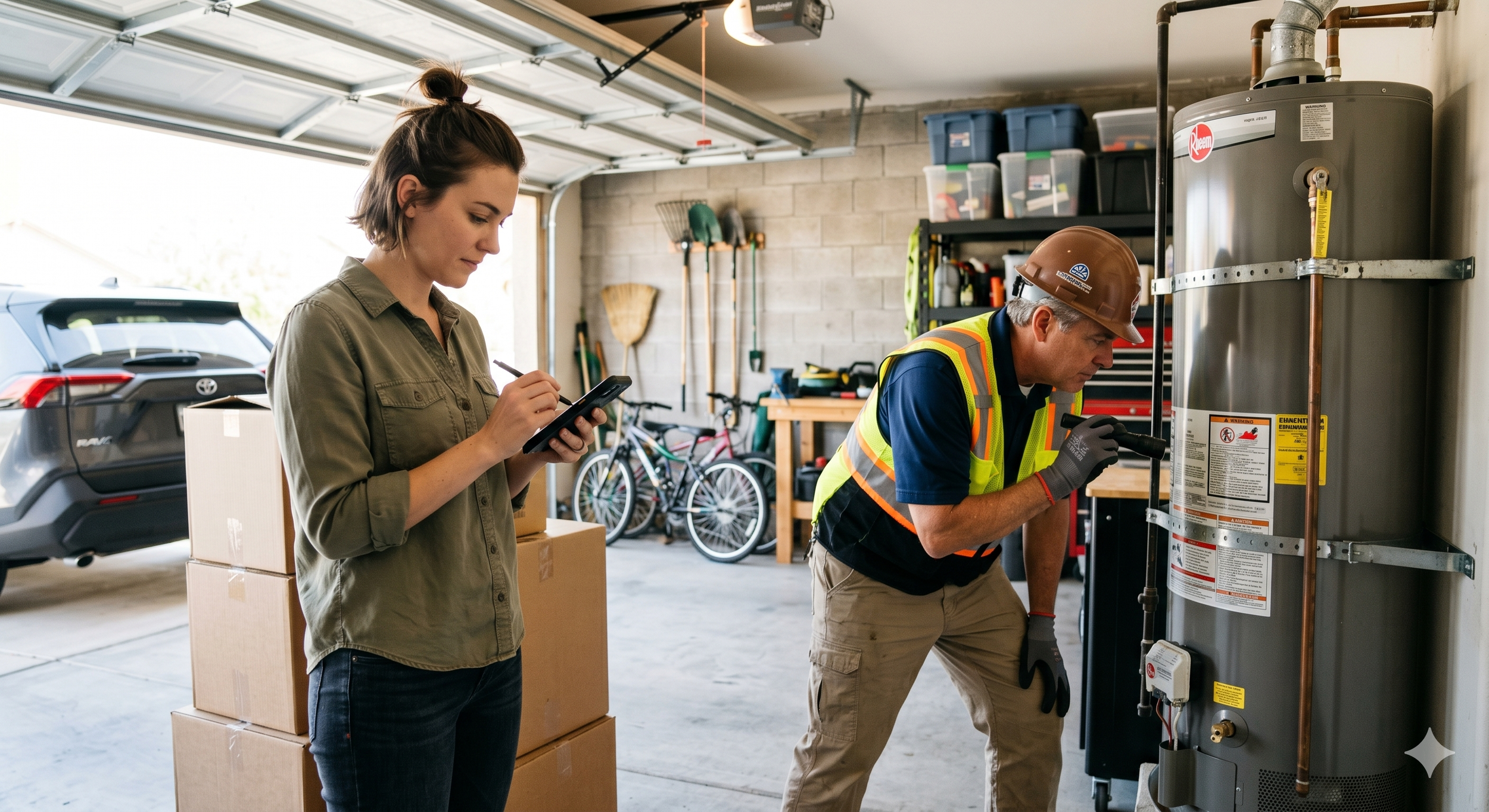
First-time homebuyers in Arizona often approach inspections with uncertainty about what to expect, how to prepare, and what questions to ask. These tips will help you navigate the inspection process effectively.
Preparation is key. Review the inspection contingency language in your purchase agreement. In Arizona, buyers typically have 7-10 days to conduct inspections and decide whether to request repairs or terminate. Know this timeline—it governs your decision-making.
Schedule the inspection at a time when you can attend. While you don't need to be present, many first-time buyers find it educational to walk through with the inspector, ask questions, and understand the property's systems and condition. Inspections typically last 2-4 hours.
Walk the property beforehand to understand its layout and condition. This helps you know what you're looking at when the inspector points things out.
During the inspection, ask questions. Professional inspectors expect and welcome inquiries. Ask about severity of identified issues, potential causes, typical repair costs, and urgency. Understanding context helps you prioritize.
Take your own notes and photos. While the inspector will provide a detailed report, your own documentation helps you remember specifics and prepare repair requests.
Don't assume inspection means every item gets fixed. Inspection findings are negotiation starting points, not repair mandates. Prioritize significant safety and structural issues over cosmetic wear.
After the inspection, take time to review the report before making decisions. Initial emotional reactions might be misleading. If you're unsure about an issue's severity, hire a specialized inspector for items concerning you.
Scottsdale Luxury Home Inspection
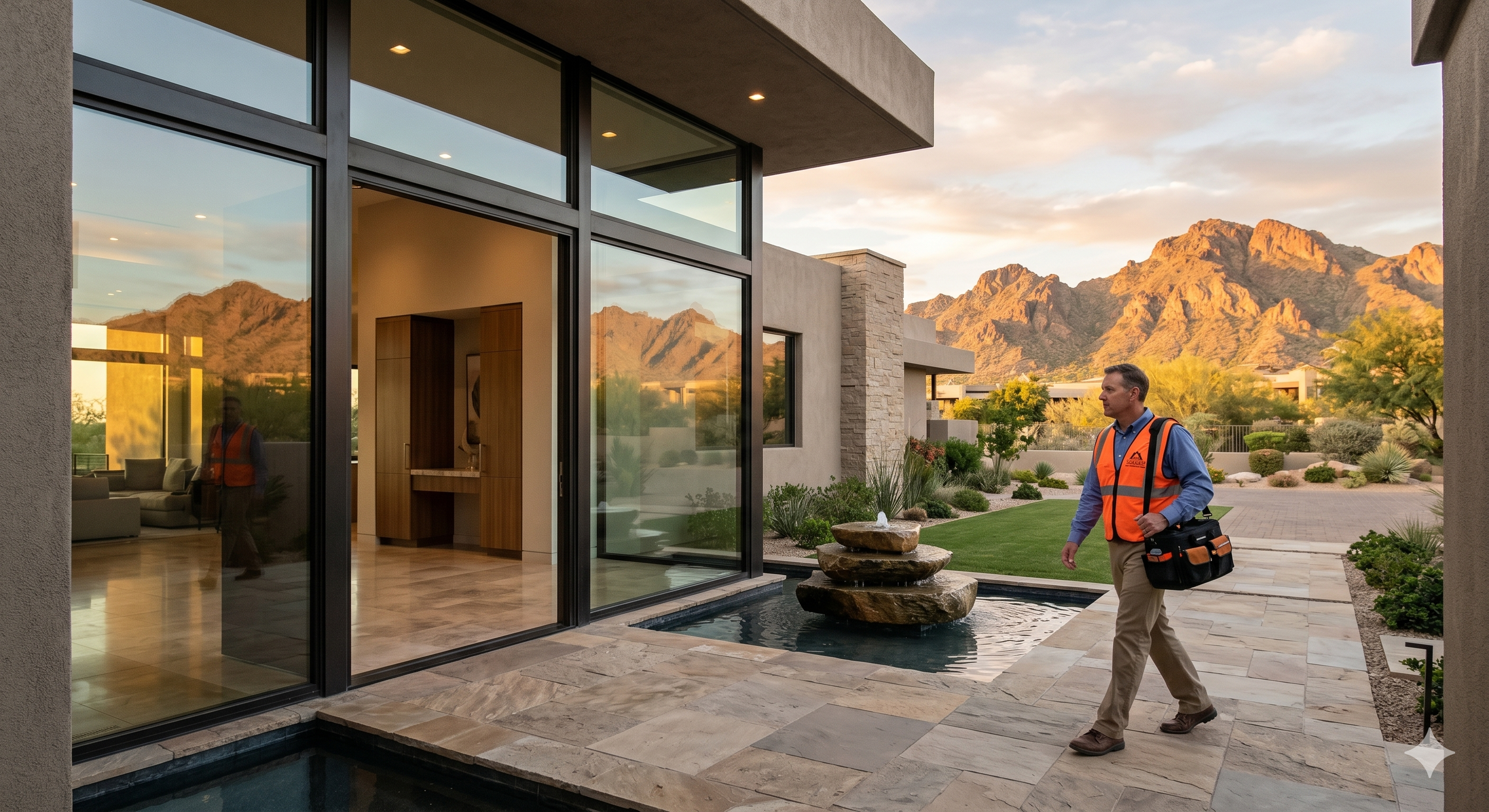
Scottsdale luxury home exterior with mountain views before high-end home inspection
A Scottsdale luxury home inspection goes far beyond the scope of a standard residential evaluation. High-end properties in areas like Silverleaf, Desert Mountain, or Troon North feature sophisticated systems, custom materials, and expansive footprints that require a specialized approach and significantly more time to inspect.

What Makes Luxury Inspections Different?
Luxury homes are essentially "smart" ecosystems. An inspector must be versed in high-tech integrations and architectural complexities that aren't found in average builds. Key focus areas include:
Automation & Smart Systems: Evaluation of integrated "Whole-Home" systems (like Crestron, Control4, or Lutron) that manage lighting, climate, security, and audio-visual components.
Complex HVAC Configurations: Luxury estates often utilize multiple zones with high-efficiency units, chillers, or wine cellar cooling systems that require precise temperature and humidity control.
Custom Building Materials: Inspection of high-end finishes such as reclaimed wood beams, imported stone, copper roofing, and floor-to-ceiling glass "pocket doors" that must slide and seal perfectly.
Commercial-Grade Appliances: Verification of professional-grade kitchen suites (Sub-Zero, Wolf, La Cornue) and outdoor summer kitchens.
The Team Approach
Because of the sheer square footage—often ranging from 5,000 to over 15,000 square feet—a Scottsdale luxury inspection is rarely a solo job. It often involves:
Lead Inspector: Oversees the general structure and coordinates the team.
Specialists: Separate experts for the pool/spa, roof (especially if custom tile or flat-roof systems), and infrared thermography.
Detailed Reporting: Reports for these properties are exhaustive, often featuring 100+ pages of high-resolution imagery, drone aerials, and thermal imaging to detect hidden moisture or insulation gaps.
Regional "High-Desert" Factors
In Scottsdale, luxury homes often contend with unique environmental challenges:
Building on Slopes: Many luxury homes are built on hillsides. Inspectors check for proper drainage and signs of soil movement that could affect retaining walls and foundations.
Wildlife Impact: High-end homes bordering the McDowell Sonoran Preserve are prone to "critter" intrusion; inspectors look for entry points for pack rats, javelinas, or desert pests that can damage wiring.
Negative Edge Pools: A staple of Scottsdale luxury, these require specialized inspection of the surge tank and the structural weir wall to ensure no slow leaks are undermining the hillside.
Cost and Value
Due to the complexity and time required (often 6–10 hours on-site), a luxury inspection is priced higher than a standard home. Costs typically range from $1,000 to $3,500+ depending on the square footage and the number of detached structures, such as guest casitas, car barns, or pool houses.
While the upfront cost is higher, the value lies in protecting a multi-million dollar investment. Discovering a failing automation processor or a leak behind expensive Venetian plaster during the due diligence period can save a buyer tens of thousands of dollars in post-closing repairs.
Pro-Tip: For Scottsdale luxury buyers, an Infrared (Thermal Imaging) Scan is non-negotiable. It can detect "invisible" leaks behind expensive stone walls and identify overheating electrical panels before they become a fire hazard in the Arizona heat.
Home Warranty Inspection
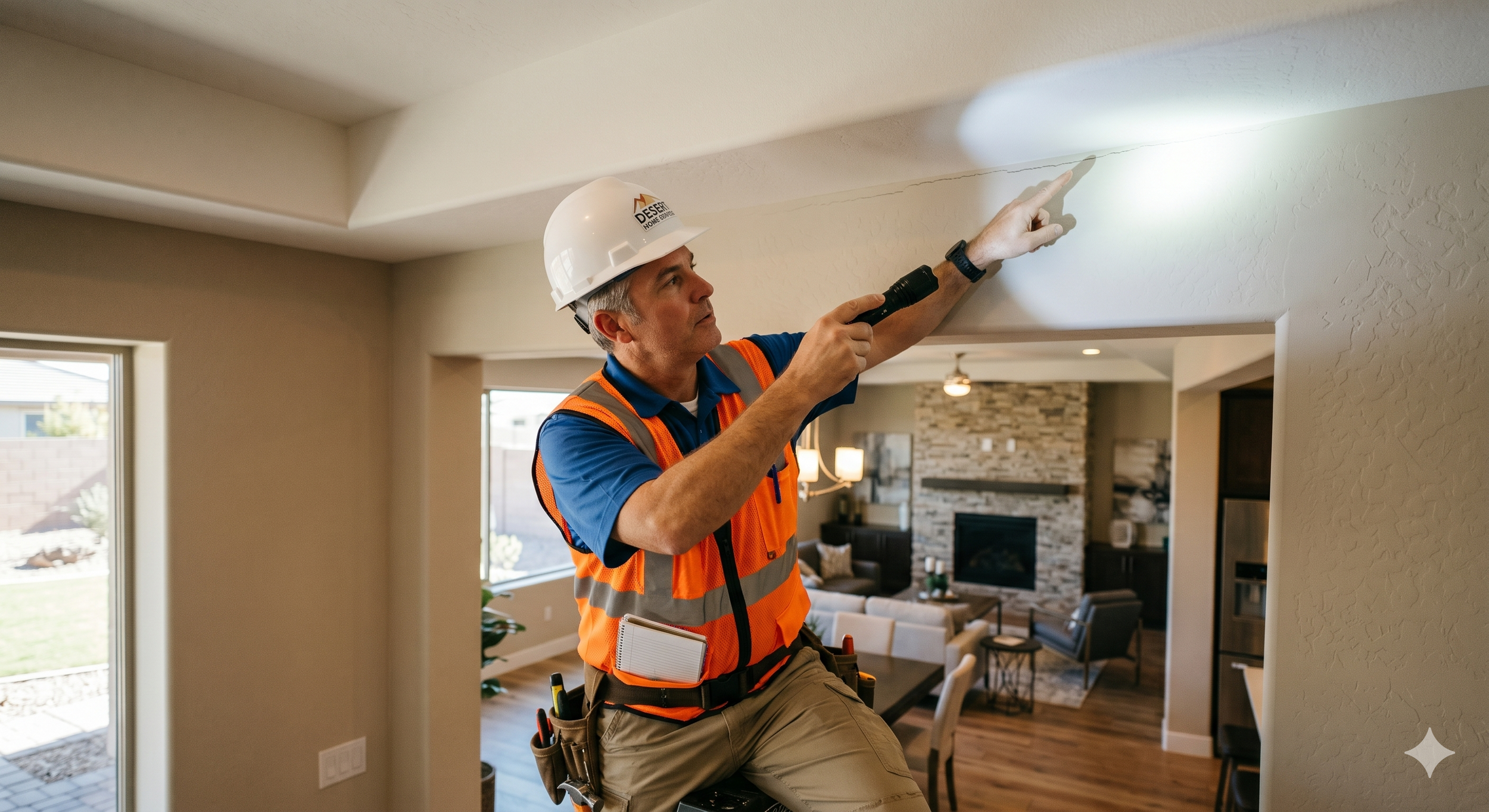
Home inspector identifying settling crack during 11-month warranty inspection in Arizona home
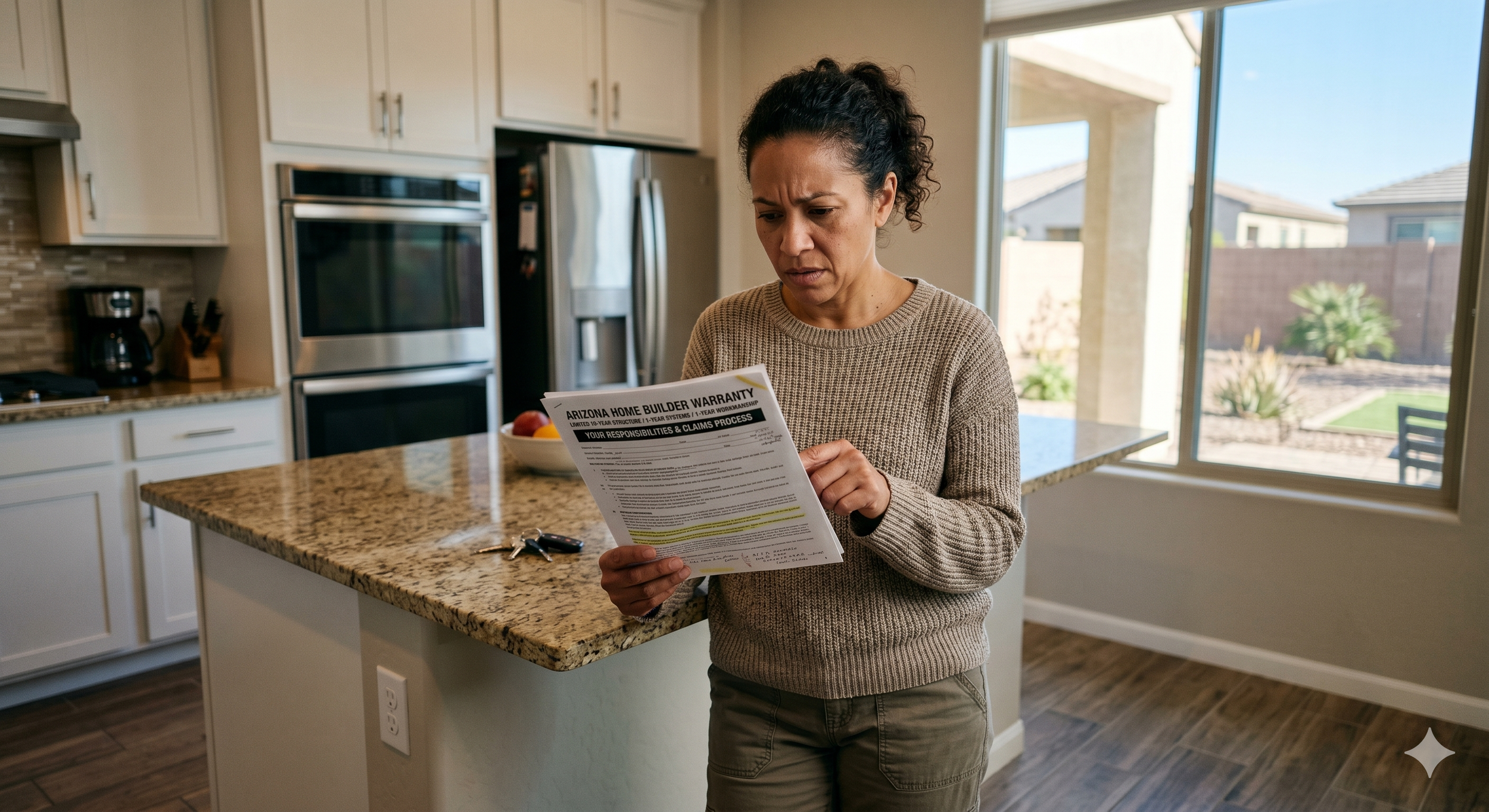
A home warranty is an optional service contract that covers repair or replacement of major systems after purchase. Home warranty inspections are a specific type of inspection used to determine warranty coverage.
When a homeowner claims warranty coverage for a failed system, the warranty company may dispatch an inspector to evaluate the damage. The inspector determines whether the failure falls within warranty coverage, whether it's excluded, or whether pre-existing conditions existed before the warranty started.
Home warranty inspections differ from pre-purchase inspections. Rather than evaluating overall property condition, warranty inspectors focus on specific failed components and whether coverage applies.
In Arizona, home warranties are commonly offered by builders for new construction homes. Typically, a builder provides a limited 1-year warranty (defects found within the first year of ownership are covered by builder), and many Arizona homebuyers purchase extended home warranties for additional coverage.
An extended home warranty typically costs $300-$600 for the first year and covers major systems like HVAC, plumbing, electrical, and appliances. If a covered system fails, the warranty company arranges repair or replacement. The homeowner pays a service call fee (typically $100-$150) for each claim.
Arizona-specific warranty value includes coverage for AC system failure—a critical protection given replacement costs of $5,000-$8,000. Extended warranties are particularly valuable for older homes or homes with aging major systems.
Home warranties aren't insurance. They have specific terms, exclusions, and limitations. Pre-existing conditions and wear items are typically not covered. Regular maintenance requirements usually apply. Before purchasing a warranty, carefully review what is and isn't covered.
For Arizona homebuyers, home warranty inspection becomes relevant after purchase when filing claims. Choosing a reliable warranty company that responds promptly to inspection requests is important.
New Construction Inspection
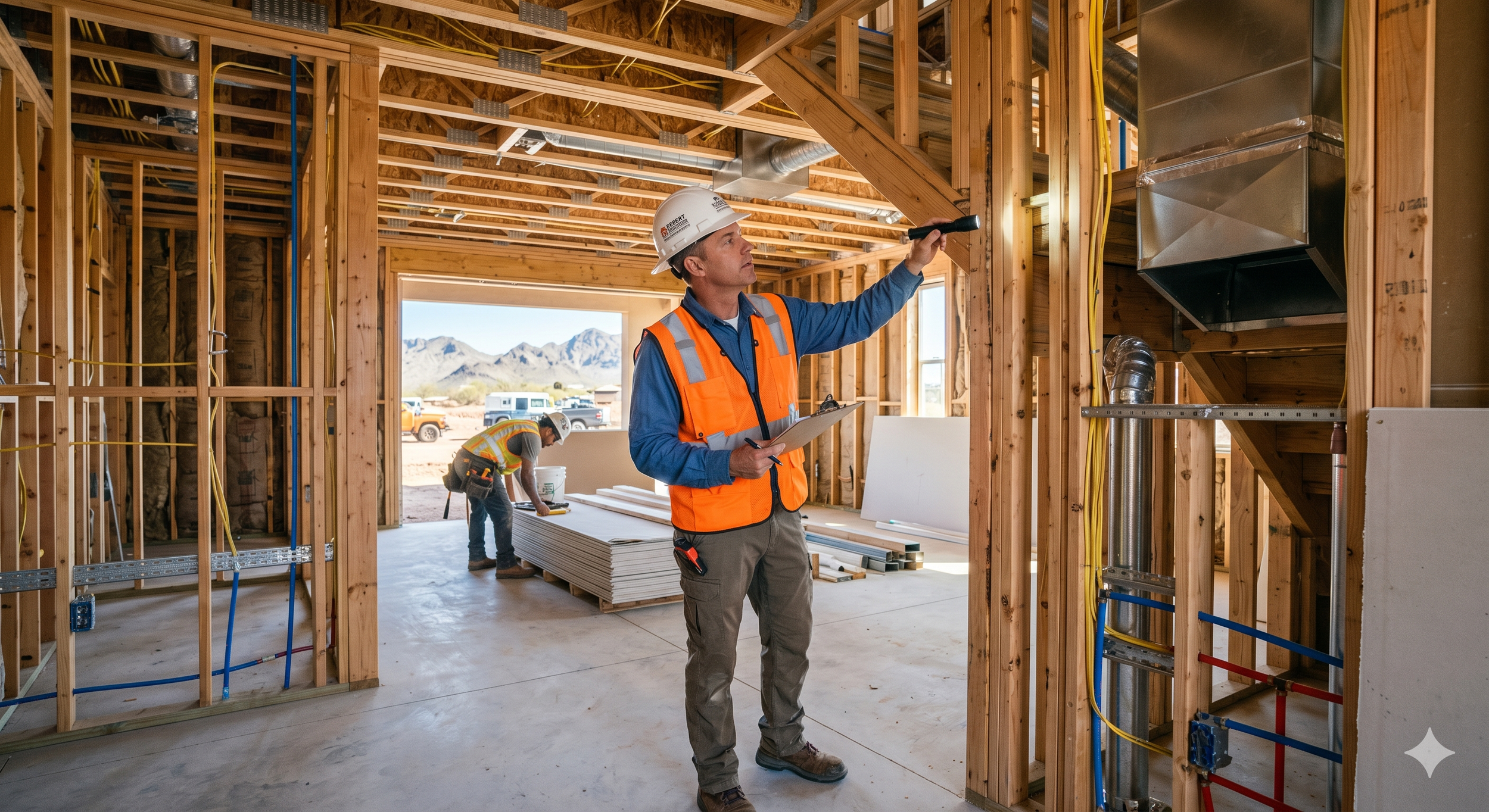
Home inspector examining new construction framing during pre-drywall phase inspection in Arizona
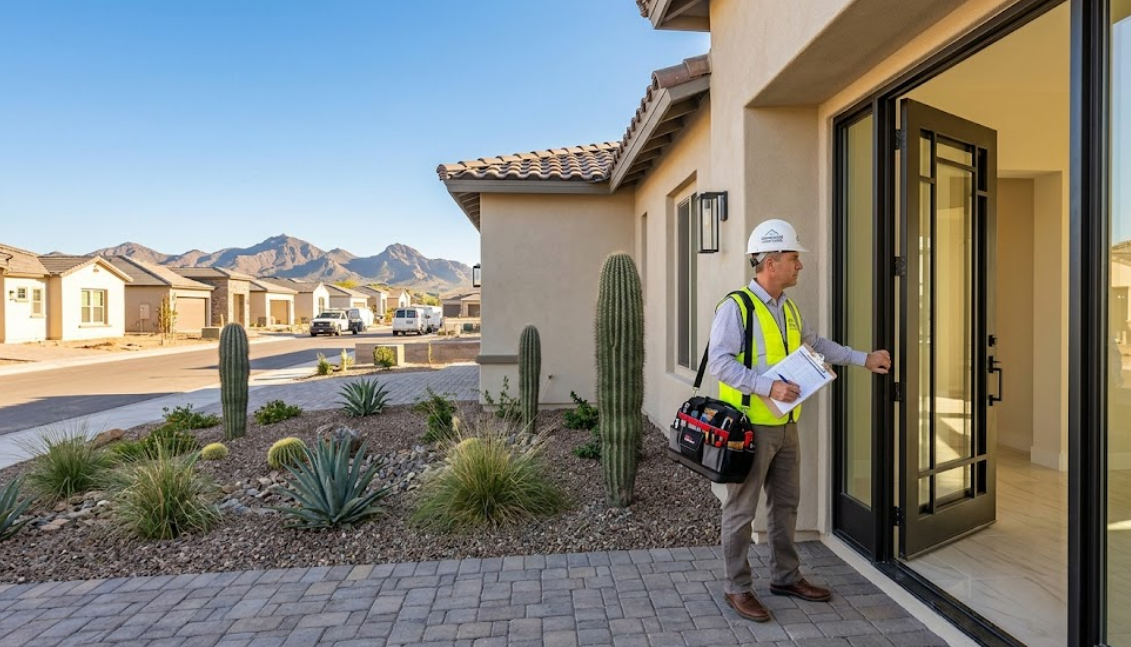
New construction homes might seem like they don't need inspections—surely a new home is in perfect condition? In reality, new construction homes warrant thorough inspection just as much as older homes. Builder defects are common, and inspection protects your investment.
During new construction inspection, the inspector evaluates whether construction meets code standards and is free from defects. This includes checking that all systems function properly, that workmanship is acceptable, that materials are installed correctly, and that no obvious defects exist.
Common new construction defects include:
- Cosmetic issues: paint drips, scratches, stains
- HVAC systems not functioning optimally
- Plumbing leaks or improper installation
- Electrical outlet or light installation issues
- Drywall cracks, uneven surfaces
- Grout and caulk deficiencies
- Trim and molding issues
- Grading and drainage problems
- Window and door installation defects
Arizona-specific new construction concerns include:
- AC system not adequately sized for Arizona heat
- Roof improperly installed for desert climate
- Stucco cracking due to thermal stress
- Drainage issues inadequate for monsoon storms
- Foundation issues from expansive soil
Builders typically offer a walk-through where they point out the home's features. This is different from a professional inspection. During a walk-through, you're being sold the home. During a professional inspection, the inspector critically evaluates it for problems.
Many Arizona homebuyers hire inspectors for new construction, even though the home is under builder warranty. The inspection creates documentation of defects, protecting your interests. If issues develop later and builder disputes arise, you have inspection documentation supporting your claims.
Timing matters with new construction. Inspections should occur near closing but before final walkthrough, allowing time to address identified issues before taking possession.
Roof Inspection in Arizona
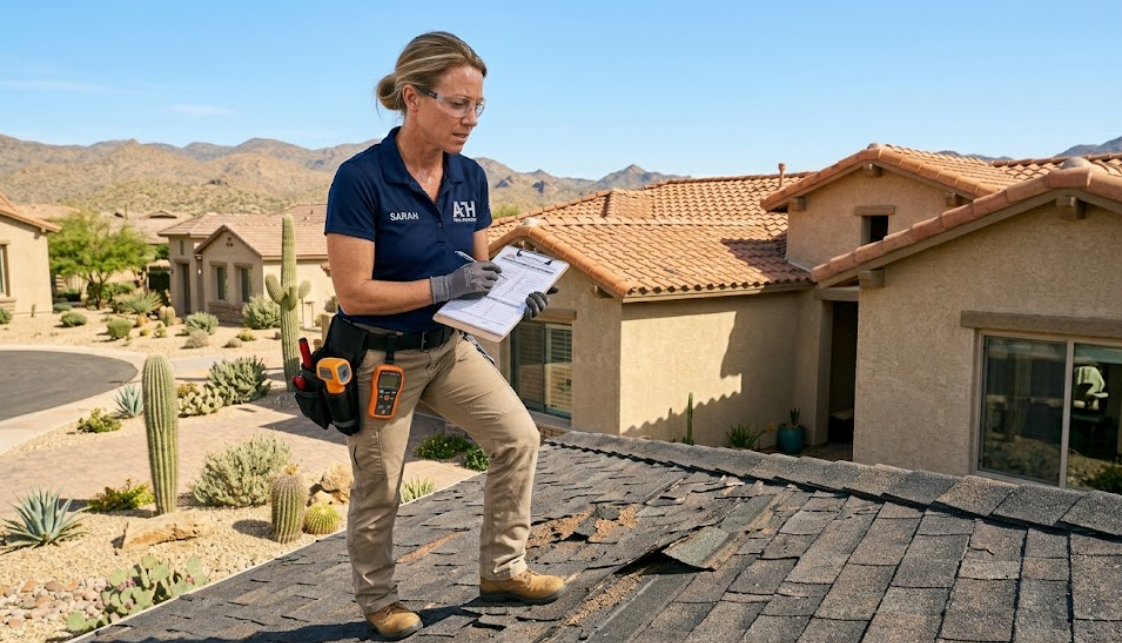
Roof inspector examining worn shingles on Arizona home under intense desert sunlight
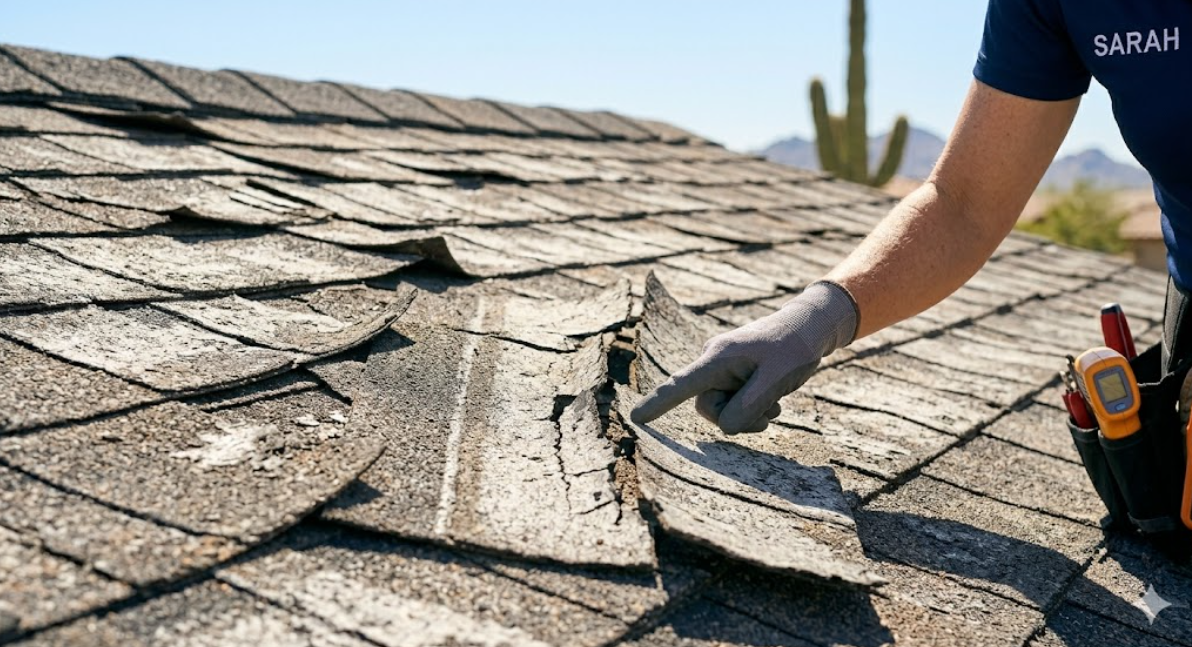
Arizona's intense sun makes roof condition particularly important. Roofs in Arizona age faster than in more moderate climates, and roof failure can quickly become expensive.
During a standard home inspection, the inspector evaluates the roof. They assess shingle condition (curling, missing, deterioration), check flashing around penetrations, look for signs of leaks or water damage, and estimate remaining roof life. Arizona-specific factors include UV damage and thermal stress from extreme temperature cycles.
Arizona roof lifespan is typically 15 years or less for standard asphalt shingles, compared to 20-25 years in moderate climates. A roof in Arizona that's 12-15 years old is approaching end of life. Roof replacement costs $8,000-$15,000+ depending on square footage and materials.
If the inspection reveals a roof approaching end of life, factor replacement costs into your offer. Many Arizona buyers request roof inspections or negotiate credits for aging roofs. Some sellers offer roof warranties or certifications showing recent replacement.
Arizona-specific roof concerns include the intense UV exposure degrading shingles faster, the extreme heat cycling causing expansion and contraction, and rare but intense monsoon rains requiring good maintenance of roof integrity and flashing. Additionally, Arizona's low humidity means roofing debris may accumulate without natural breakdown.
Pool Inspection in Arizona
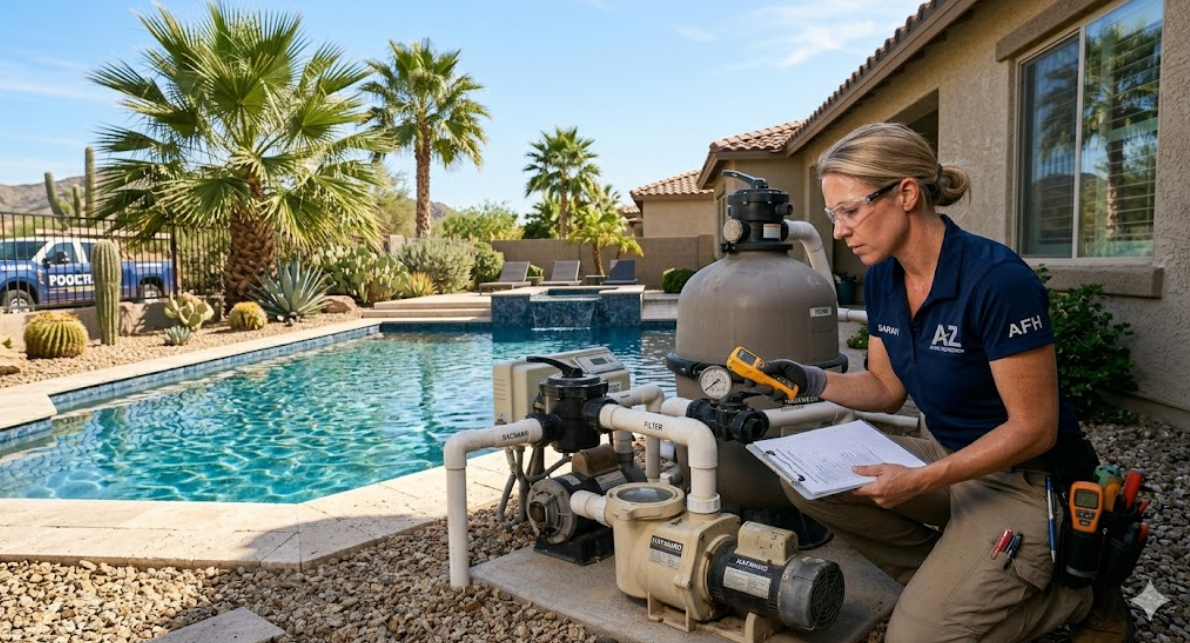
Pool inspector checking equipment and condition of backyard swimming pool at Arizona home

For Arizona homes with swimming pools—which is common given the heat—a pool inspection is an important part of evaluating the property. Pool condition can significantly affect the property's value and your post-purchase costs.
A standard home inspection includes visual evaluation of the pool. The inspector assesses whether the pool is functional, checks for obvious cracks or structural damage, evaluates equipment operation (pump, filter, heater), and assesses safety features. However, standard inspections don't provide detailed structural or chemical analysis.
For detailed pool evaluation, a specialized pool inspector provides more comprehensive assessment. They evaluate structural integrity, identify potential leaks, assess equipment condition and estimated replacement cost, check electrical safety, and evaluate water chemistry. Specialized pool inspection costs $300-$500.
Arizona pool-specific concerns include the intense UV exposure, which degrades pool finishes (plaster) relatively quickly. Arizona pools typically need resurfacing every 7-10 years compared to 15-20 years in other climates. Additionally, Arizona's hard water can cause scaling and mineral buildup. Expansion and contraction from extreme temperature swings can cause cracks.
Pool equipment—pumps, filters, heaters—also faces stress in Arizona's heat. Equipment lifespan may be shortened compared to more moderate climates. Pump replacement costs $1,500-$3,000. Filter and heater replacement can add $2,000-$5,000.
If purchasing a home with a pool, ensure you understand the equipment age and condition. An older pool with aging equipment could require $10,000-$20,000 in repairs or upgrades within a few years post-purchase. Many Arizona homebuyers factor pool maintenance costs into their purchase decisions.